
What is it like to live paycheck to paycheck, trying to pay bills and take care of your family’s needs each month?
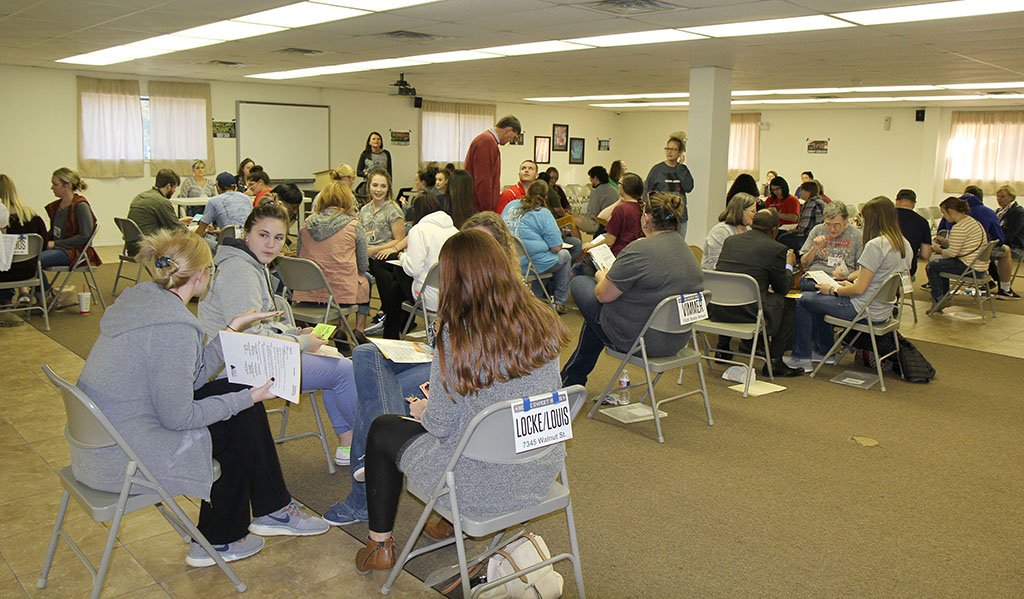
That’s what several students, faculty and staff members from Missouri State University-West Plains learned about during a poverty simulation hosted by Ozark Action, Inc., officials on Oct. 29, at their facility in West Plains.
The experience is designed to help participants understand what it’s like to live in a typical low-income family to sensitize them to the realities faced by these families every day, organizers said.
How it worked
Participants were placed in “families” facing a variety of difficulties – unemployment, serious illness or injury, fixed incomes, homelessness, abandonment by the “breadwinner,” etc. They were given the task to provide basic necessities and shelter for their families during four 15-minute “weeks.”
A variety of community resources were represented, including a bank, retail center, grocery store, utility company, school, employer, health center, community action agency, social service agency, faith-based agency, pawn broker, payday and title loan facility, mortgage company and child care center.
Following the exercise, participants were encouraged to share their feelings and experiences and talk about what they learned.
Gratitude for Ozark Action, Inc.
“The experience was amazing,” said Deanna Smith, regional outreach administrator for the local Missouri State University Outreach office. “Having the ability to do the simulation locally through Ozark Action saved several of our elementary education students pursuing a bachelor’s degree a trip to Springfield, as this was a requirement for one of the classes in our program this semester.
“Other instructors gave extra credit for their students to attend,” she added.
Smith noted a total of 63 area residents participated in the exercise; 54 of them were from Missouri State-West Plains.
“We are thankful to have Ozark Action, Inc., here in West Plains,” Smith said. “This poverty simulation was an eye-opening experience for all who attended and will definitely benefit students who are pursuing careers in teaching and other field areas that deal with children and families in our local communities.”